



PTFE Moulded Parts, Blanks, Solid Rods and Hollow Rods
PTFE Semi-Finished Products and Moulded Parts – Precision for Demanding Applications
Beichler & Grünenwald manufactures PTFE moulded parts, blanks, solid rods and hollow rods using static and isostatic pressing processes.
Our products offer maximum dimensional accuracy, material homogeneity and durability, from pressed semi-finished blanks through to precision-machined components.
Our PTFE blanks, solid rods and hollow rods are used in the chemical industry, mechanical engineering and medical technology, and are tailored precisely to your specific requirements.
Static and Isostatic PTFE Pressing Processes
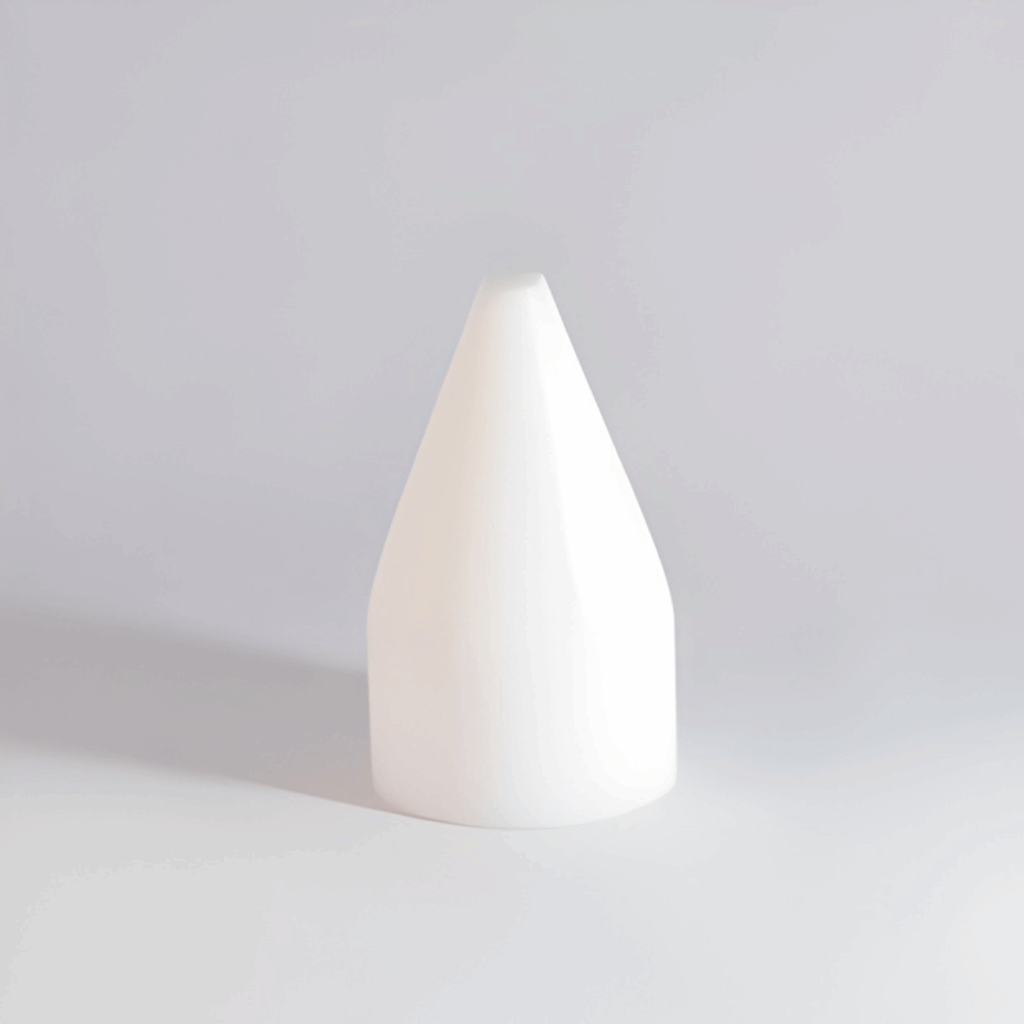
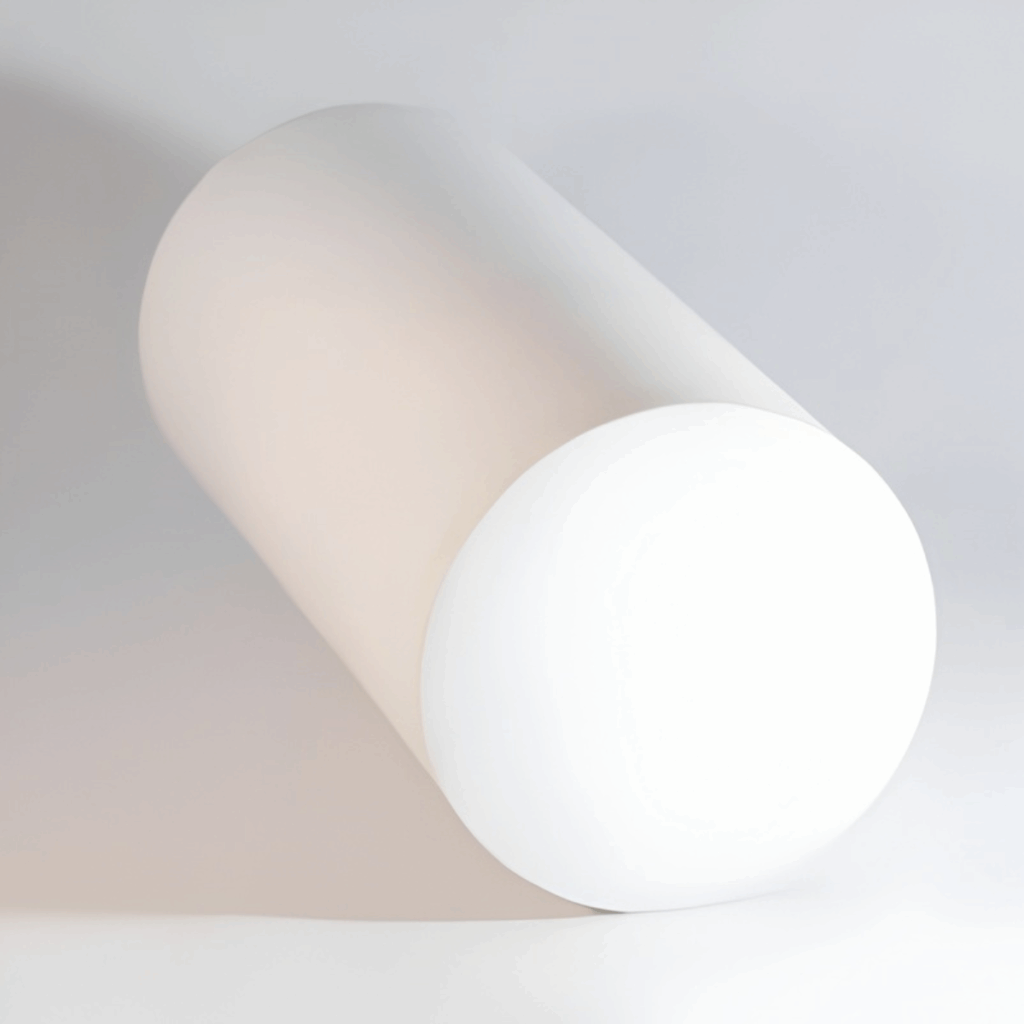
Static Pressing – Economical Production of PTFE Blanks and Solid Rods
In static pressing, PTFE granulate is filled into shaping moulds and compacted axially. The blanks are then sintered in ovens according to defined sintering curves.
Typical dimensional ranges:
- Diameters: Ø 10 mm to Ø 500 mm
- Lengths / heights: depending on geometry and degree of compaction
- Particularly suitable for compact, rotationally symmetrical components
Advantages:
- Economical production of simple geometries
- Ideal for PTFE blanks and solid rods
- High reproducibility for standard dimensions
Isostatic Pressing – Hollow Rods and Complex PTFE Blanks
In isostatic pressing, PTFE granulate is filled into flexible moulds and compacted uniformly from all directions. This produces a homogeneous material structure with high density and excellent dimensional accuracy.
Typical dimensional ranges:
- Diameters: Ø 20 mm to Ø 1,200 mm
- Large heights, thick-walled cross-sections and internal contours are achievable
- Ideal for hollow rods, thick-walled blanks and complex geometries
Advantages:
- Uniform density across the entire cross-section
- Maximum dimensional accuracy for precision components
- Particularly suitable for complex internal contours and customised solutions
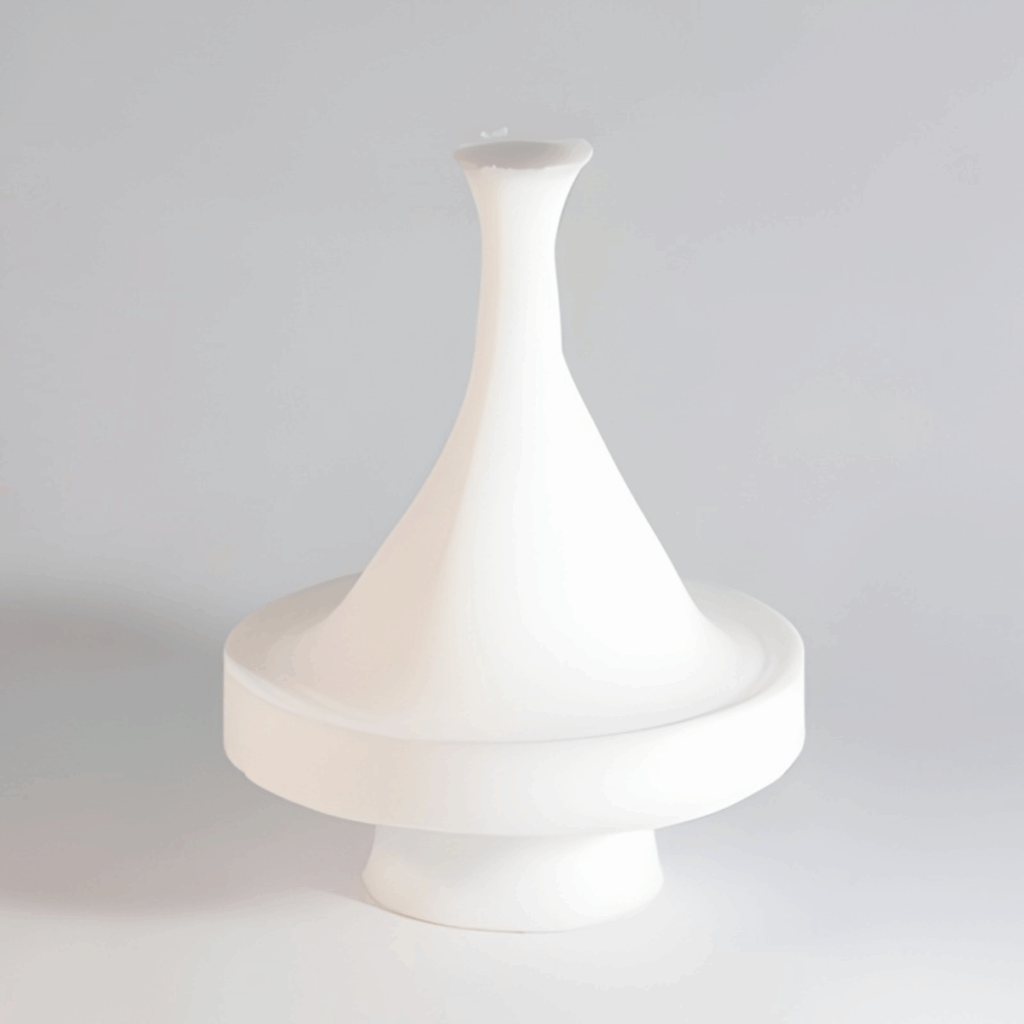
Sintering Process – From PTFE Blank to Precision Component
After pressing, PTFE blanks are sintered at approximately 375 °C. This process gives the material its characteristic properties, such as chemical resistance, non-stick behaviour and thermal stability.
Specialised programmes ensure:
- Controlled heating
- Constant temperature holding
- Stress-free cooling
Process duration ranges from 12 to 90 hours, depending on size, wall thickness and pressing method. Large or thick-walled hollow rods may require longer processing times.
Subsequently, machining operations such as turning, milling or drilling are carried out to achieve tight tolerances and defined surface finishes.
Custom Dimensions and Special Solutions
For particularly large diameters, thick-walled hollow rods or complex internal contours, we individually coordinate the pressing strategy, tooling concept and sintering cycle to your application.
The result is PTFE blanks, solid rods and hollow rods precisely tailored to your downstream processing or final application.
Cost Efficiency and Quality
Modern calculation methods and intelligent tooling designs enable material savings of up to 90 percent.
Additional surface processes allow the creation of vacuum-tight bonded assemblies, for example for housing linings or demanding coating applications.
Materials and Fillers
Our pressing processes are suitable for both unfilled and filled PTFE materials. By incorporating fillers such as glass fibre, graphite, bronze or carbon, material properties can be specifically adjusted:
- Increased wear resistance
- Reduced friction coefficients
- Improved thermal conductivity
We support your project from the pressed blank through to the fully machined finished component.
PTFE Engineered to Technical Perfection
Whether PTFE blank, solid rod, hollow rod or complex moulded part, we are your partner for economical and highly precise PTFE solutions. Benefit from experience, precision and personal consultation.
Frequently Asked Questions About PTFE Moulded Parts
They are pressed semi-finished products made from PTFE, used either as base material for machining or directly as functional components.
High density, homogeneous structure, excellent chemical resistance and dimensional stability – ideal for seals, bearing bushes, insulators and precision components.
PTFE has an extremely high melt viscosity and therefore cannot be processed using conventional injection moulding. Components are manufactured using static or isostatic pressing, as well as extrusion for tubes, rods or profiles.
Yes. Upon request, we provide 3.1 inspection certificates in accordance with DIN EN 10204, declarations of conformity and documented process data to ensure full traceability.